Friday, July 29, 2011

Bano Qudsia

Bano Qudsia (Punjabi, Urdu: بانو قدسیه) (born 1928) is a writer, intellectual, playwright and spiritualist from Pakistan who wrote Urdu novels and short storiesregarded among the best Urdu novelists and short story writers of modern times.She is best known for her novel Raja Gidh.She has written for television and stage in both the Urdu and Punjabi languages. Bano Qudsia is recognized as a trendsetter in the realm of television plays. Some of them gained immense popularity across the border because of their vitality, warmth and courage. Strife is one word she would like to banish from the dictionary. She attributes the hostilities raging across the world to the Intolerance and selfishness of the human race. She was married to novelist Ashfaq Ahmed. She has written television plays. She was awarded the Sitara-e-Imtiaz in 2003 and the Hilal-e-Imtiaz in 2010.

Uzma Gilani

Uzma Gilani may fondly reminisce if she sees this Flashback. Those were happier times when she was in better health and on a good terms with her close friends and business partner at Blazon Advertisng company, Asif Raza Mir. But like the other two supremely talented actresses who made up the triumvirate, Roohi Bano and Khalida Riyassat, Uzmaâ life took an unfortunate turn for the worse when she learnt she was suffering from cancer. One often wonders then if there is any correlation between talent and intensity in acting and the dreaded disease. Perhaps it has something to do with thinking and feeling too much as one also witnesses this trend in the life of brilliant actress and cancer survivor Yasmeen Ismail. Despite all the obstacle life has presented before her Uzma has nevertheless maintained her position as one of pakistan leading TV actress, despite also leaving the industry for a sojoum in the glitz world of advertising for a successful decade. One trait that one always associates.

Farida Khanum

Farida Khanum (born 1935) is a Pakistani Ghazal singer from Punjab. The Times of India has called her "Malika-e-Ghazal" (Queen of Ghazal).In 2005, she was awarded the Hilal-e-Imtiaz, Pakistan's second highest civilian honour by President Pervez Musharraf.  Born in (1935) in Calcutta and raised in Amritsar. Her sister is Mukhtar Begum.She started learning Khayal from her sister Mukhtar Begum at age seven and later learnt classical music from Ustad Ashiq Ali Khan. Her sister Mukhtar Begum would take her, a seven-year-old Farida, to Khan’s place for riyaaz.She migrated to Pakistan after partition of India in 1947.

Tariq Aziz (Neelam ghar)

Tariq Aziz is a Pakistani television host (born April 28, 1936) known for his work on the general-knowledge quiz show Neelam Ghar, later renamed the Tariq Aziz Show and now known as Bazm-e-Tariq Aziz.His show was, first of all, aired in 1975 under the name Neelam Ghar (نیلام گھر).He lived in Sahiwal for long time. He got early education from Sahiwal and then started his career from Radio Pakistan Lahore. When Pakistan started its TV telecast in 1964 from Lahore he had the honour of being the first male PTV announcer.He also Participated in politics of Pakistan and won the General Election in 1996 for National Assembly of Pakistan on ticket from Pakistan Muslim League (N).

Allan Fakir

Allan Fakir (1932–2000) (Sindhi: اَلڻُ فقيرُ, Urdu: الن فقیر), a Pakistani folk singer is a one of the foremost exponents of sufi music in Pakistan. He is particularly known for his ecstatic style of performance marked with extreme devotional rhetoric and sufi dance singing. His peculiarly funny body language and distinctively pleasing facial expressions marked with a broad smile, were always amusing for his audience at live performances.His songs, mostly in Sindhi language except a few in Urdu, usually revolve around sufism and the devotional philosophy. But the characteristic which distinguishes him from many other folk singers is the depth of his feelings, which is very expressive in all his songs. One of his famous songs is a duet with Muhammad Ali Shehki, "Allah Allah kar bhaiya" which was a big hit and increased his popularity tremendously. A patriotic song "Itne bare jeewan saagar main" also got very popular.
In appreciation of his services to folk culture, he was given a job and a small house at the Institute of Sindhology. He was originally appointed as an officer to help promote Sindhi culture, but due to his illiteracy, he was eventually demoted to the post of peon.Allan Fakir received the President's Pride of Performance award in 1980, the Shahbaz Award in 1987, the Shah Latif Award in 1992 and Kandhkot Award in 1993. Allan Fakir died on 4 July 2000

Abdur Rahman Chughtai

Abdur Rahman Chughtai (1899–1975) was a painter and intellectual from Pakistan who was best known for his "Chughtai" style of art, as well has his designs of postage stamps. He was awarded Pakistan's Hilal-i-Imtiaz in 1960, and the President of West Germany awarded him a Gold Medal in 1964 for his accomplishments. He died in Lahore on January 17,1975.
He was considered one of the most famous representatives of Pakistan and Chughtai’s paintings were gifted to visiting heads of states. Allama Iqbal, Pablo Picasso, Elizabeth II were amongst his admirers. An estimated 25 million people saw his Wembley show in 1924.His works are displayed at the British Museum, the Victoria and Albert Museum, the Peace Palace (in The Hague), United Nations Headquarters, New York, the Kennedy Memorial in Boston, the US State Department (in Washington, D.C.), President's House Bonn, Nizam of Hyderabad’s Palace, Queen Juliana's Palace in the Netherlands, Emperor's Palace Bangkok, President House Islamabad, Governors’ Houses in Lahore and Karachi, and the National Art Gallery, Islamabad.Among his famous works are the logos of Pakistan Television and Radio Pakistan and his painting of Anarkali for the cover of a 1992 drama. Additionally, one of the most successful UNICEF cards features a Chughtai.Artist and gallery owner Salima Hashmi deems Chughtai one of South Asia’s foremost painters. “He was part of the movement that started in the early part of the 20th century to establish an identity indigenous to the subcontinent,” she said. “He rejected the hegemony of the British Colonial aesthetic.” United Nations Organization art correspondent Jacob-Baal Teshuva wrote that Chughtai’s paintings are the most set released in 1948.


Nighat Chaudhry
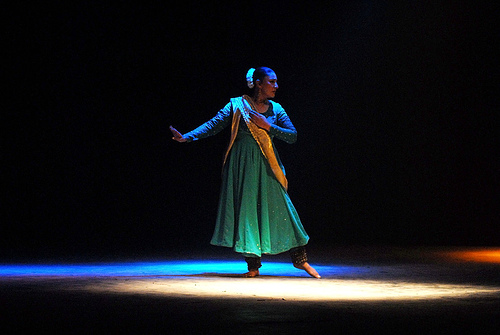
Who is not familiar with the Nighat Chaodhry, an artiste, who exercises a monopoly in classical dance. Born in Lahore and brought up in England Nighat has been a dancer from an early age as her skills were vividly visible when she was still a toddler. Later under the tutelage of legendry kathak dancer Naheed Siddque, she got herself groomed to perfection. Besides learning ballet and contemporary dance in London, Nighat also get herself trained in Kathak from the venerated institution of Kathak Kendra in Delhi, from Pandit Durga Lal of the Jaipur gharana. Today she is a force to reckon with, an institution to look forward to. With her newly founded NGO i.e. National Dance Foundations that she aims to preserve the dance heritage of our country. Under her belt two esteemed projects have already set in namely ?Classical Dances of Pakistan (Since Partition)?and ? Mountain Dances of Pakistan?. Best of luck , Nighat !!